Jesus and the Roman Empire
Summary
Why Understanding the 1st Century Dynamics between the Roman Empire and Jews is Important to Forming a New Image of Jesus
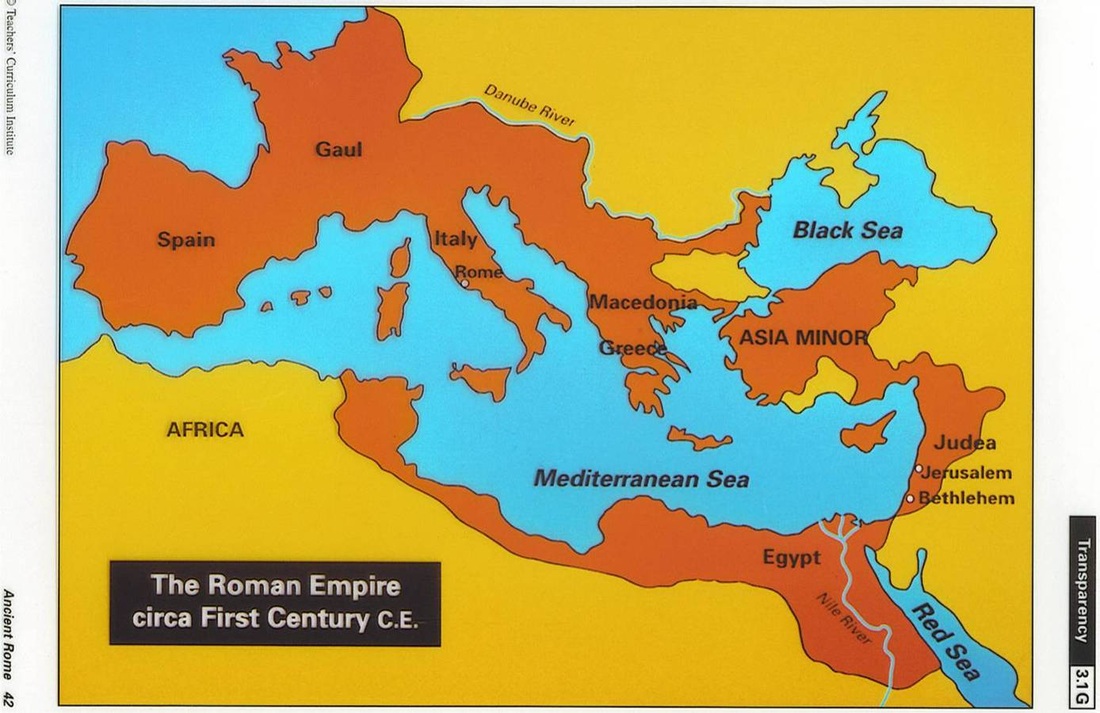
Western Christianity has domesticated and “depoliticized” Jesus (Horsley 2003, 6). As we have domesticated Jesus, we have so domesticated his background. We talk about “Jews” as if they are a single entity, but in fact the society Jesus lived in was very complex and involving many realities that influenced his teachings. “The peoples of Palestine in the time of Jesus appear as a complex society full of political conflict rather than unitary religion (Judaism) (Horsley 2003, 10).” Opposition to Roman injustice and rule regularly marked the immediate Palestinian context of Jesus’ ministry. Horsley asserts one cannot comprehend Jesus in isolation but with the historical conditions surrounded around Him (Horsley 2008, 18). He cites the cultural traditions, Jewish roots, and predicaments of Jewish and Galilean people in the 1st century to Jesus’ leadership and overall ministry (Horsley 2008, 18).
Therefore, “trying to understand Jesus’ speech and action without knowing how Roman imperialism determined the conditions of life in Galilee and Jerusalem” is rather like “trying to understand Martin Luther King without knowing how slavery, reconstruction, and segregation determined the lives of African-Americans in the United States (Horsley 2003, 13).” Horsley wants us to read Jesus as a leader who “belonged in the same context with and stands shoulder to shoulder with these other leaders of movements among the Galilean and Judean people, and pursues the same general agenda in parallel paths”: independence from Roman imperial rule and a restored rule of God (Horsley 2003, 104).
Biblical scholar Christopher Bryan questions “How far should these considerations (Roman imperialism and Jewish experience under that rule) affect our understanding of Jesus of Nazareth (Bryan 2005, 7)?” This question is the basis of my study. I wanted to explore the political readings of Jesus in the Gospels using the techniques of postcolonial biblical criticism. Most scholars that I read agreed that Jesus according to the Gospels was political or revolutionary. In the next section, I will explore some scholars’ assertions of Jesus’ words and deeds that can be determined in through a postcolonial biblical critic lens as political.
The Words and Deeds of Jesus
In recent years there has been a surging assertion that the gospel of Mark can be read as a “political” interpretation of Jesus (Moore 2006, 194). Reading Mark with a zealot lens and historical context of the time period positions Mark as “anti-imperial literature, pure and simple” (Moore 2006, 196). Tat-sioing Benny Liew like Stephen D. Moore understands that “most scholars who read Mark’s Gospel in light of Roman colonization of Palestine in the first century CE have interpreted the Gospel as a document for liberation (Liew 2006, 206).” Liew concludes that although Mark may critique the current colonial order, it also “reinscribe(s) colonial domination.” Liew claims that Mark’s Jesus “has absolute authority in interpreting and arbitrating God’s will.” Marks’ politics of parousia remains “a politics of power, because Mark still understands authority as the ability to have one’s commands obeyed and followed, or the power to wipe out those who do not.” Liew declares Mark’s Gospel has a recurring theme of “empire” in the form of “tyranny, boundary, and might (Liew 2006, 215-216).”
Mark’s representation of empire in his gospel raises the question if Mark is merely mirroring Roman imperial ideology and switching Jesus with Caesar (Moore 2006, 200). Moore sees Mark 5:1-9 as a dual reference to demonic possession and colonial occupation. Demons perhaps like the Romans are occupying the Jew’s property, so Jesus’ exorcism represents liberation from this authority and unwanted invasion (Moore 2006, 194). Mark is not overly political or critical of the Roman Empire compared to Revelation, but nonetheless there are still significant trickles of allegations against Rome and want for freedom from them (Moore 2006, 201).
Adam Gopnik like many other Jesus scholars states that, “If Jesus says something nice, then someone is probably saying it for him; if he says something nasty, then probably he really did (Gopnik 2010, 2).” Gopnik claims two particular instances where Jesus gets “nasty’ with the not only the Romans of the day but the Jews too. One instance was Jesus’ rules for eating. Jesus breaks Roman and Jewish norms by eating with prostitutes and tax collectors (Gopnik 2010, 5). Gopnik reads the scene in Mark 12:17 as another attempt by the high priests to catch Jesus in a declaration of anti-Roman sentiment. Jesus’ response is brilliant in Gopnik’s mind because Jesus turns the question back on the questioner in mock-innocence. Gopnik calls it a “tautology designed to evade self-incrimination (Gopnik 2010, 4).”
Bruce N. Fisk in his new book through the character of Norm, a recent religion graduate, illustrates a journey to discover the Jesus of History and the Jesus of Gospels. Norm like his past professors of biblical criticism is not convinced that every Bible story can be “taken at face value”, so he decides to find out who Jesus is (Fisk 2011, 15). One of the many topics Norm touches on in chapter 6 that I never realized until reading this book was the political overtones of Jesus. I always saw Jesus as a spiritual leader not a political one. When Norm mentions how the parade on the donkey could have been a parody of Pilate’s military parade and a challenge to Roman rule, this challenged my ideology of Jesus (Fisk 2011, 195). Warren Carter seconds this claim of Jesus as a political leader. Carter concludes that Romans do not crucify people because they are spiritual; they crucify people because they seem them as a political threat to the Roman system (Carter 2006, x).
This notion of Jesus as a political leader rather than a spiritual leader can be interpreted using the Gospel of John. Stephen D. Moore contends that John is “the most-and the least-political of the canonical gospels.” He gives support for the most political gospel as John’s clear word choice in John 6:15, 12:12, 11:48, and 19.7 (Moore 2006, 50). John “represents the charges brought against Jesus as political charges with a consistency and single-mindedness that is altogether absent from the Synoptic tradition (Moore 2006, 50-51).” Moore stresses that John is on other the hand the least political of the canonical gospels it that John’s same passion narrative “seems to place Jesus’ kingship front and center only in order to depoliticize it (Moore 2006, 50-51).”
The Legacy of Jesus through Paul’s Letters
Paul’s gospel of Christ announced “doom and destruction not on Judaism or the Law, but on the rulers of this age (Horsley 1997, 6).” Horsley suggests given the historical context of Paul’s mission that it is not difficult to draw the implications of Paul’s opposition to the Roman Empire. Horsley cites Romans 9-11 and Galatians 3 where Paul asserts in those letters history has not been primarily working through Rome but through Israel. Paul asserts fulfillment of history has now come with Jesus (Horsley 1997, 7). Unlike the other sources, this book looks at the relations between the Jews turned Christians and Romans after Jesus’ death. Looking at Paul’s mission and language, Horsley explores the legacy of Jesus’ political implications in the mid 1st century. Horsley suggests that by looking at Galatians and Corinthians, one can understand the sense of the commission that Christ had given Paul to build not religious in the sense of Roman context communities but local and politically charged Christians ready for “the kingdom of God” and promises of Jesus (Horsley 1997, 8).
Western Christianity has domesticated and “depoliticized” Jesus (Horsley 2003, 6). As we have domesticated Jesus, we have so domesticated his background. We talk about “Jews” as if they are a single entity, but in fact the society Jesus lived in was very complex and involving many realities that influenced his teachings. “The peoples of Palestine in the time of Jesus appear as a complex society full of political conflict rather than unitary religion (Judaism) (Horsley 2003, 10).” Opposition to Roman injustice and rule regularly marked the immediate Palestinian context of Jesus’ ministry. Horsley asserts one cannot comprehend Jesus in isolation but with the historical conditions surrounded around Him (Horsley 2008, 18). He cites the cultural traditions, Jewish roots, and predicaments of Jewish and Galilean people in the 1st century to Jesus’ leadership and overall ministry (Horsley 2008, 18).
Therefore, “trying to understand Jesus’ speech and action without knowing how Roman imperialism determined the conditions of life in Galilee and Jerusalem” is rather like “trying to understand Martin Luther King without knowing how slavery, reconstruction, and segregation determined the lives of African-Americans in the United States (Horsley 2003, 13).” Horsley wants us to read Jesus as a leader who “belonged in the same context with and stands shoulder to shoulder with these other leaders of movements among the Galilean and Judean people, and pursues the same general agenda in parallel paths”: independence from Roman imperial rule and a restored rule of God (Horsley 2003, 104).
Biblical scholar Christopher Bryan questions “How far should these considerations (Roman imperialism and Jewish experience under that rule) affect our understanding of Jesus of Nazareth (Bryan 2005, 7)?” This question is the basis of my study. I wanted to explore the political readings of Jesus in the Gospels using the techniques of postcolonial biblical criticism. Most scholars that I read agreed that Jesus according to the Gospels was political or revolutionary. In the next section, I will explore some scholars’ assertions of Jesus’ words and deeds that can be determined in through a postcolonial biblical critic lens as political.
The Words and Deeds of Jesus
In recent years there has been a surging assertion that the gospel of Mark can be read as a “political” interpretation of Jesus (Moore 2006, 194). Reading Mark with a zealot lens and historical context of the time period positions Mark as “anti-imperial literature, pure and simple” (Moore 2006, 196). Tat-sioing Benny Liew like Stephen D. Moore understands that “most scholars who read Mark’s Gospel in light of Roman colonization of Palestine in the first century CE have interpreted the Gospel as a document for liberation (Liew 2006, 206).” Liew concludes that although Mark may critique the current colonial order, it also “reinscribe(s) colonial domination.” Liew claims that Mark’s Jesus “has absolute authority in interpreting and arbitrating God’s will.” Marks’ politics of parousia remains “a politics of power, because Mark still understands authority as the ability to have one’s commands obeyed and followed, or the power to wipe out those who do not.” Liew declares Mark’s Gospel has a recurring theme of “empire” in the form of “tyranny, boundary, and might (Liew 2006, 215-216).”
Mark’s representation of empire in his gospel raises the question if Mark is merely mirroring Roman imperial ideology and switching Jesus with Caesar (Moore 2006, 200). Moore sees Mark 5:1-9 as a dual reference to demonic possession and colonial occupation. Demons perhaps like the Romans are occupying the Jew’s property, so Jesus’ exorcism represents liberation from this authority and unwanted invasion (Moore 2006, 194). Mark is not overly political or critical of the Roman Empire compared to Revelation, but nonetheless there are still significant trickles of allegations against Rome and want for freedom from them (Moore 2006, 201).
Adam Gopnik like many other Jesus scholars states that, “If Jesus says something nice, then someone is probably saying it for him; if he says something nasty, then probably he really did (Gopnik 2010, 2).” Gopnik claims two particular instances where Jesus gets “nasty’ with the not only the Romans of the day but the Jews too. One instance was Jesus’ rules for eating. Jesus breaks Roman and Jewish norms by eating with prostitutes and tax collectors (Gopnik 2010, 5). Gopnik reads the scene in Mark 12:17 as another attempt by the high priests to catch Jesus in a declaration of anti-Roman sentiment. Jesus’ response is brilliant in Gopnik’s mind because Jesus turns the question back on the questioner in mock-innocence. Gopnik calls it a “tautology designed to evade self-incrimination (Gopnik 2010, 4).”
Bruce N. Fisk in his new book through the character of Norm, a recent religion graduate, illustrates a journey to discover the Jesus of History and the Jesus of Gospels. Norm like his past professors of biblical criticism is not convinced that every Bible story can be “taken at face value”, so he decides to find out who Jesus is (Fisk 2011, 15). One of the many topics Norm touches on in chapter 6 that I never realized until reading this book was the political overtones of Jesus. I always saw Jesus as a spiritual leader not a political one. When Norm mentions how the parade on the donkey could have been a parody of Pilate’s military parade and a challenge to Roman rule, this challenged my ideology of Jesus (Fisk 2011, 195). Warren Carter seconds this claim of Jesus as a political leader. Carter concludes that Romans do not crucify people because they are spiritual; they crucify people because they seem them as a political threat to the Roman system (Carter 2006, x).
This notion of Jesus as a political leader rather than a spiritual leader can be interpreted using the Gospel of John. Stephen D. Moore contends that John is “the most-and the least-political of the canonical gospels.” He gives support for the most political gospel as John’s clear word choice in John 6:15, 12:12, 11:48, and 19.7 (Moore 2006, 50). John “represents the charges brought against Jesus as political charges with a consistency and single-mindedness that is altogether absent from the Synoptic tradition (Moore 2006, 50-51).” Moore stresses that John is on other the hand the least political of the canonical gospels it that John’s same passion narrative “seems to place Jesus’ kingship front and center only in order to depoliticize it (Moore 2006, 50-51).”
The Legacy of Jesus through Paul’s Letters
Paul’s gospel of Christ announced “doom and destruction not on Judaism or the Law, but on the rulers of this age (Horsley 1997, 6).” Horsley suggests given the historical context of Paul’s mission that it is not difficult to draw the implications of Paul’s opposition to the Roman Empire. Horsley cites Romans 9-11 and Galatians 3 where Paul asserts in those letters history has not been primarily working through Rome but through Israel. Paul asserts fulfillment of history has now come with Jesus (Horsley 1997, 7). Unlike the other sources, this book looks at the relations between the Jews turned Christians and Romans after Jesus’ death. Looking at Paul’s mission and language, Horsley explores the legacy of Jesus’ political implications in the mid 1st century. Horsley suggests that by looking at Galatians and Corinthians, one can understand the sense of the commission that Christ had given Paul to build not religious in the sense of Roman context communities but local and politically charged Christians ready for “the kingdom of God” and promises of Jesus (Horsley 1997, 8).
Annotated Bibliography
Bible Translation Database. http://www.biblegateway.com/ (Accessed April 20, 2012).
For my research, I used bible gateway because of its easy searchable nature. With this database, you can search key words or phrases. This database helped me situate the Gospel verses that each author in their theses were using to cite Jesus as either political or not during the 1st century. Most authors wrote the Bible verse in their footnotes as evidence to put Jesus in a light as the political opponent to Roman authority, but the problem during my research was the verse was not reproduced in its entirety. I also understand that through translation to the English language meaning and word choice changes from the Greek and Hebrew, so this database gives the user many different options to see the same word or deed of Jesus in a different English translation. It adds to the depth of the research to find the politics of Jesus’ ministry.
Bryan, Christopher. Render to Caesar: Jesus, the Early Church, and the Roman Superpower. Oxford: Oxford University Press, 2005.
Bryan asks many questions that are both exegetical and historical in nature. Bryan’s overarching question is “how far should these considerations (Roman imperialism and Jewish experience under that rule) affect our understanding of Jesus of Nazareth (7)?” Bryan concludes that Jesus and early Christians did indeed have a critique of Roman imperialism, which was a critique broadly in line with the entire biblical and prophetic tradition. On that basis, Bryan sees Jesus as another messenger delivering this tradition. The biblical God challenges not just Rome but all human power structures not attempting to “dismantle them or replace them” but “consistently confronting them with the truth about their origin and purpose (9).” Jesus, to Bryan, is a megaphone of God and the biblical tradition that reminds human power structures to severe God’s glory by promoting peace and justice. Bryan places this in the context that Jesus’ words and works echo biblical tradition, so they are to an extent “political and revolutionary (9).”
Carter, Warren. The Roman Empire and the New Testament: An Essential Guide. Nashville: Abingdon Press, 2006.
This book explores ways in which New Testament writers interact with and negotiate the Roman imperial world. Carter clearly rejects the notion that Jesus and the Gospel writings are not political. He cites John 18:36 as not Jesus’ apathy to Rome’s empire but a clear claim to His origin and rule. Romans do not crucify people because they are spiritual; they crucify people because they seem them as a political threat to the Roman system. Carter organizes his book first to describe the Roman imperial system and the evaluations of this system by Gospel writers. He then identifies the interactions between the two. Carter explores Jesus’ claims in the New Testament as evidence for contesting Roman imperial theology. In Chapter 6, Carter states that Rome asserted its divine sanction for its imperial rule by claiming that the gods had chosen Rome to manifest the God’s sovereignty, presence, agency, and blessings on earth. Carter concludes after analyzing New Testament passages that they present Jesus as the agent of God’s sovereignty, presence, will, and blessings disputing this claim of imperial theology.
Fiorenza, Elisabeth Schussler. Jesus and the Politics of Interpretation. New York: The Continuum International Publishing Group Ltd, 2000.
Fiorenza’s hope is to “assist students, colleagues, and the wider public interested in Historical-Jesus research to sort out the academic and popular meaning-making about Jesus and its moral and religious implications.” Fiorenza is not concerned with presenting one more sophisticated version of the story of Jesus. She is worried about investigating how such Jesus research is produced. She uses this book to study the rich array of Historical-Jesus theories and proposals in the field and how “political conceptual frameworks” re-interpret them. This book seeks to “inquire into the rhetoricity and politics of Historical-Jesus interpretation as a rhetorical process of meaning-making (ix-x).” Fiorenza unlike the other authors uses the ideology of feminism to rediscover the historical Jesus and point to the interconnections between power and knowledge in His message.
Fisk, Bruce N. A Hitchhiker’s Guide to Jesus: Reading the Gospels on the Ground. Grand Rapids: Baker Publishing Group, 2011.
Bruce N. Fisk through the character of Norm, a recent religion graduate, illustrates a journey to discover the Jesus of History and the Jesus of Gospels. Inspired by philosophy and religion professors and authors, Norm sets out on a journey to the Holy Land to distinguish between “text and event (15).” Norm like his past professors of Biblical criticism is not convinced that every Bible story can be “taken at face value”, so he decides to find out who Jesus is (15). One of the many topics Norm touches on in chapter 6 that I never realized until reading this book was the political overtones of Jesus. I always saw Jesus as a spiritual leader not a political one. Norm mentions how the parade on the donkey could have be a parody of Pilate’s military parade and a challenge to Roman rule (195). If Jesus was mocking Pilate, why didn’t this come up in the evidence for his arrest and death? This chapter in the beginning of our class inspired me to research this topic of Jesus as perhaps an alternative to Roman authority in 1st century Palestine.
Gopnik, Adam. “What Did Jesus Do? Reading and Unreading the Gospels.”New Yorker, May 24, 2010.
Gopnik asserts that there is an “appetite for historical study of the New Testament” that remains “a publishing constant and a popular craze (2).” Gopnik summarizes several of these new books in this field. In this process, he cites that the reader has this desire to know what Jesus said and who He was in context to tradition and history. Gopnik like many other Jesus scholars states that, “If Jesus says something nice, then someone is probably saying it for him; if he says something nasty, then probably he really did (2).” Gopnik claims two particular instances where Jesus gets “nasty’ with not only the Romans of the day but the Jews as well. One instance was Jesus’ rules for eating. Jesus breaks Roman and Jewish norms by eating with prostitutes and tax collectors (5). Gopnik reads the scene in Mark 12:17 as another attempt by the high priests to catch Jesus in a declaration of anti-Roman sentiment. Jesus’ response is brilliant in Gopnik’s mind because Jesus turns the question back on the questioner in mock-innocence. Gopnik calls it a “tautology designed to evade self-incrimination (4).”
Horsley, Richard A. Jesus and Empire: The Kingdom of God and the New World Disorder. Minneapolis: Augsburg Fortress, 2003.
He suggests that much modern Western Christianity has domesticated and “depoliticized” Jesus (6). As we have domesticated Jesus, we have so domesticated his background. We talk about “Jews” as if they are a single entity, but in fact the society Jesus lived in was very complex and involving many realities that influenced his teachings. “The peoples of Palestine in the time of Jesus appear as a complex society full of political conflict rather than unitary religion (Judaism) (10).” Opposition to Roman injustice and rule regularly marked the immediate Palestinian context of Jesus’ ministry. Therefore, “trying to understand Jesus’ speech and action without knowing how Roman imperialism determined the conditions of life in Galilee and Jerusalem” is rather like “trying to understand Martin Luther King without knowing how slavery, reconstruction, and segregation determined the lives of African-Americans in the United States (13).” Horsley wants us to read Jesus as a leader who “belonged in the same context with and stands shoulder to shoulder with these other leaders of movements among the Galilean and Judean people, and pursues the same general agenda in parallel paths: independence from "Roman imperial rule” and a restored “rule of God” (104).
Horsley, Richard A. Jesus in Context: Power, People, & Performance. Minneapolis: Fortress Press, 2008.
Horsley suggests a new approach to look at historical Jesus with more than just the Gospels for the field’s scholarship. His book presents how the understanding of how oral performances, social memory, and the “hidden transcript” of subordinate groups all putting Jesus into a new context of 1st century Palestine and the Roman world (18). With Horsley’s new method to situate Jesus in history and Jewish society explained, he then organizes his book in such a way. Horsley asserts one cannot comprehend Jesus in isolation but with the historical conditions surrounded around Him. He cites the cultural traditions, Jewish roots, predicaments of Jewish and Galilean people in the 1st century, and Jesus’ leadership and movement (18). Horsley calls for the use of non-canonical items to understand Jesus in the context of his society and time period in this book as well.
Horsley, Richard A. "Introduction." In Paul and Empire: Religion and Power in Roman Imperial Society, edited by Richard A. Horsley, 1-10. Harrisburg: Trinity Press International, 1997.
Paul’s gospel of Christ announced “doom and destruction not on Judaism or the Law, but on the rulers of this age (6).” Horsley suggests given the historical context of Paul’s mission that it is not difficult to draw the implications of Paul’s opposition to the Roman Empire. Horsley cites Romans 9-11 and Galatians 3 where Paul asserts in those letters history has not been primarily working through Rome but through Israel. Paul asserts fulfillment of history has now come with Jesus (7). Unlike the other sources, this book looks at the relations between the Jews turned Christians and Romans after Jesus’ death. Looking at Paul’s mission and language, Horsley explores the legacy of Jesus’ political implications in the mid 1st century. Horsley suggests that by looking at Galatians and Corinthians, one can understand the sense of the commission that Christ had given Paul to build not religious in the sense of Roman context communities but local and politically charged Christians ready for “the kingdom of God” and promises of Jesus (8).
Liew, Tat-sioing Benny. “Tyranny, Boundary, and Might: Colonial Mimicry in Mark’s Gospel.” In The Postcolonial Biblical Reader, edited by R.S. Sugirtharjah, 206-223. Richmond: University of Richmond, 2006.
Liew understands that “most scholars who read Mark’s Gospel in light of Roman colonization of Palestine in the first century CE have interpreted the Gospel as a document for liberation.” Liew states that most scholars put Mark in a positive light or praise for liberation (206). Liew with her personal history and background is caught in the larger context of Hong Kong who is also sensitized to colonial power relations and a consciousness of a diaspora refuses to idealize anything including Mark’s characterization of empire and Jesus (207). Liew concludes that although Mark may critique the current colonial order, it also “reinscribe(s) colonial domination.” Liew claims that Mark’s Jesus “has absolute authority in interpreting and arbitrating God’s will.” Marks’ politics of parousia remains “a politics of power, because Mark still understands authority as the ability to have one’s commands obeyed and followed, or the power to wipe out those who do not.” Liew declares Mark’s Gospel has a recurring theme of “empire” in the form of “tyranny, boundary, and might (215-216).”
Moore, Stephen D. Empire and Apocalypse: Postcolonialism and the New Testament. Sheffield: Sheffield Phoenix Press, 2006.
Moore in this book offers a complete and in-depth look at the emerging field of postcolonial biblical criticism. After explaining the field’s purpose and recent studies, Moore examines Mark, John, and Revelation’s concept of empire and colonial relations. In the other books, I focused on Mark and his political Jesus. I used Moore’s book to take a look at John’s Jesus in relation to this topic. Moore contends that John is “the most-and the least-political of the canonical gospels.” He gives support for the most political gospel as John’s clear word choice in John 6:15, 12:12, 11:48, and 19.7 (50). John “represents the charges brought against Jesus as political charges with a consistency and single-mindedness that is altogether absent from the Synoptic tradition (50-51).” Moore stresses that John is on other the hand the least political of the canonical gospels it that John’s same passion narrative “seems to place Jesus’ kingship front and center only in order to depoliticize it (50-51).”
Moore, Stephen D. “Mark and Empire: ‘Zealot’ and ‘Postcolonial’ Readings.” In The Postcolonial Biblical Reader, edited by R.S. Sugirtharajah, 191-205 (2006).
Moore says that in recent years there has been a surging assertion that the gospel of Mark can be read as a “political” interpretation of Jesus (194). Reading Mark with a zealot lens and historical context of the time period positions Mark as “anti-imperial literature, pure and simple’ according to Moore (196). Moore claims that Mark “refuses to relinquish its dreams of empire, even while deftly deconstructing the models of economic exchange that enable empires, even eschatological ones (204)”. Mark’s representation of empire in his gospel raises the question if Mark is merely mirroring Roman imperial ideology and switching Jesus with Caesar (200). Moore sees Mark 5:1-9 as a dual reference to demonic possession and colonial occupation. Demons perhaps like the Romans are occupying the Jew’s property, so Jesus’ exorcism represents liberation from this authority and unwanted invasion (194). Mark is not overly political or critical of the Roman Empire compared to Revelation, but nonetheless there are still significant trickles of allegations against Rome and want for freedom from them (201).